


I found this story very confusing, as we have not yet gone through it in class, so I may add some more to this post after a better understanding is given.
From my understanding, this story has very many different meanings in reation to setting ones house in order. The literal meaning of this, is that the Grandmother is obsessed with a very tidy house. She has for her whole life been in a well managed home, and has had a housekeeper. During the depression her son and his family move in to help maintain this order, but as the wife is now going through a difficult pregnancy not much has been done, and they are unable to afford a housekeeper.
The household is growing, figuritively, giving it a new order. Roderick, the grandmothers youngest son had died at war, and her husband had died nine years earlier. The house now contains The grandmother, Beth, Ewen, and their daughter Vanessa. Beth's sister Edna joins the house to aid in the housework, and the new baby (Roderick) is also born by the end. This has set a whole new order on the household from begining to end.
Vanessa is an observative growing ten year old. She is listening and trying to understand with her great curiosity. Her grandmother tries to help her grow into a lady by telling her of her families past and of their quotes and accomplishments. Her aunt and parents try to teach her reality, by telling her the truth and of all the happenings while her mother is in labour. Vanessa also figuritively has an order set to her throughout this story. She is growing and understanding life in a different sence. She questions new things, such as thoughts of if her dead sister had lived after birth, and how life would be different.
Popular Posts
-
I found this story very confusing, as we have not yet gone through it in class, so I may add some more to this post after a better understan...
-
In class the other day we learned about compare and contrast (surprise, surprise). No matter how far away we get from high school I don'...
-
We are currently writing a causal argument, I am writing mine on the effects of vegetarianism on a human body. Naturally, being a vegetarian...
-
August 19, 1942. The battle of Dieppe, which was against a German troup on the port, lasted nearly six hours. Of the 6000 men killed du...
-
"Sundays too my father got up early and put his clothes on in the blue black cold , then with cracked hands that ached from labor ...
-
I can write a blog on this right? It is technically a writing course, whether I am talking about argumentative writing or not, it should sti...
-
February 2nd, 2012 We need to do a book review for our writing class, and quite honestly, I have no idea what to expect out of this proje...
-
"The only thing we have to fear is fear is fear itself." Although the assignment was to discuss rather or not the statement is ...
-
Finally, the last post. I'm going to tell you a little about my research paper. I'm writing it in a fictional short story format, ...
-
Growing up I basically taught myself how to read in English. Taking French immersion it wasn't in the curriculum until the third grade....
Sunday, October 30, 2011

Stones (Dieppe) CM1120 #2
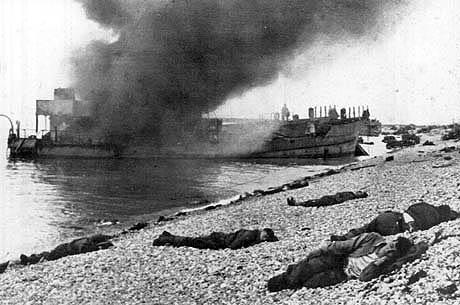
August 19, 1942.
The battle of Dieppe, which was against a German troup on the port, lasted nearly six hours. Of the 6000 men killed during this battle, mostly were Canadians. The battle of Dieppe was proven to be a failure from the begining. They had absolutely no chances of acheiving the plans they had made, and therefore this battle was simply a very large amount of unnecessary casualties. Thinking of the date, it 1942 they did not have the proper experience with battles such as this to calculate exactly how and when to do it. So this battle proved for one purpose, for gaining experience. Although in gaining this experience, the world has lost many men.
The short story "Stones" gives a very interesting point of view on this battle. The aftermath of one man, a father. David Max had experienced Dieppe as he had frozen in fear, resulting in the death of many of his men who may have survived. He took this experience as a very large sence of guilt for the rest of his life. He had taken it out of hiself, his wife, and his children. He became an alcoholic, bullied his children (as stated in the story forced his children to do things for him such as closing the blinds, and he had broken his youngest sons collar bone) and his wife, who he had tried to kill with a hammer.
This story fills you with a sence of grief and disgust, but also a feeling of remorse, for the family and him, and for what the war has caused them to go through.
Subscribe to:
Posts (Atom)