Popular Posts

Monday, November 28, 2011

Blogs. CM1120 #10

My final post, is going to be about blogs.

Writing these blogs gives someone a whole new perspective about what you are reading. It isn't an essay explaining your understanding of the topic, and it isn't a summary of what you think you've read. It's something completely different. You need to write how it made you feel, what you believe the other was trying to express, the symbolism, the diction. It is basically the thought process that runs through your mind and flows onto the computer screen after you've read the poem or story. In some cases (like in a few of my own), there is a paragraph of research put into the post, to help you better understand why the poet or author has written what they have. For example in "Those Winter Sundays" I learned that perhaps the author wrote the poem reflecting his own past (although it was not stated it makes sense when you read the authors childhood background). Other cases may be posts like this. They are related to the course, but not completely on a story or a poem, maybe they were extensions of your mind's thoughts after reading a poem (as in how my previous post was about how the human mind works), or a post about how punctuation really grinds your gears!

I felt like this assignment really expanded my thinking, it made me think and use a larger vocabulary, think about my grammar, and work on my punctuation. It helped me reflect back on some previous points in my life, and relate them to where I stand now in my English language.

I've read some of the other blogs posts from the others in the class, and learned something else. How hard it is to comment on someone else's work! You cannot simply say "Wow! I enjoyed that! It made really made me think about the poem!" You need to express opinions, and points of interest. How hard could that be? Well it's hard if you aren't really sure about the poem or story yourself! That is why I slightly enjoyed going off topic in my posts, although they are still related to the CM 1120 class, I believe they are more relatable by other students who may not have read "The Red Convertable" or "My Mistress' Eyes be Nothing Like The Sun" (sorry if that is wrong). Everyone knows how punctuation can be a pain, and I'm sure everyone can relate to procrastinating on their research paper!

To end this I'd like to state that these posts are due at midnight tonight, along with 5 comments on other peoples blogs. (Which I am now heading off to do, before starting a long night of studying calculus!)

So thank you all for reading my posts and for all the wonderful comments! I really appreciate it! Also I hope others enjoyed this project as much as I did.

Eleanor Rigby CM1120 #9

I know you are expecting this blog to be about Eleanor Rigby, all the lonely people, and how the Beatles had written the song, why, etc. But instead, I am going to share with you a thought that popped into my mind.

I was sitting here, pondering so hard over what I should write my last two blogs posts about, not having a single clue, not wanting to write about how I felt about another poem or story. When suddenly, a fellow blogger posted a blog about Eleanor Rigby. As I sat here, eating my tofu chicken fettuccine alfredo, I pondered if I should also write a blog post about Eleanor Rigby, as it is a catchy song, and by the Beatles, who are amazing  for hidden meanings in their songs, posters, and videos. Then I started to think about the conspiracy of the death of Paul McCartney. I had once done so much research on this learning about it and understanding it, when suddenly I realized that I can retain this useless information about a bunch of dead guys (mostly), and I can not remember anything from my biology course!

I had my mind blown to pieces. I remember all these little details such as a different colour in one of their posters symbolizing Paul's death, but I can not remember for the life of me the difference between Xylem and Phloem. No matter how truly interesting I am in learning biology (and believe me I am it is so interesting), I can not retain the information. Is it not expressed interestingly enough? Is there to much information for my brain to retain in such a short time? Who knows.

Anyway, it is simply flabbergasting how the human mind works, maybe I'll learn about that in biology some day though.

Things CM1120 #8

What happened is, we grew lonely

living among the things,
so we gave the clock a face,
the chair a back,
the table four stout legs
which will never suffer fatigue.
We fitted our shoes with tongues
as smooth as our own
and hung tongues inside bells
so we could listen
to their emotional language,

and because we loved graceful profiles
the pitcher received a lip,
the bottle a long, slender neck.


Even what was beyond us
was recast in our image;
we gave the country a heart,
the storm an eye,
the cave a mouth
so we could pass into safety.


This poem is a prime example of personification. "What happened is, we grew lonely/living among the things,/" therefore we created personification, giving "the clock a face,/ the chair a back,/ the table four stout legs/". Although this poem expresses many of the different personifications we've created there are also many other examples that aren't quite as obvious. The ocean sings, leaves dance, wind howls, cars are called "she", a mouse attached to your computer is named a "mouse". There are so many other examples of personification, and probably others which haven't even been thought up yet.

I personally love this poem because it uses such an interesting view on objects and the personification given to them, as in a clock with a face. When you say the face of a clock reads 12:45pm with the big hand and the little hand, you do not consciously compare this to a person having a face and hands. You simply know that when the big hand is on the 12 of the face, the person is talking about a clock. When you say the leg of that chair is broken, you do not compare it to the broken leg of a human, it doesn't seem as dramatic. It is only a chair, but it is still a leg.


When I read poems like this, and others, even stories, I often feel a surge of inspiration. I wish I could write as beautifully as some of these authors do. I find it so amazing how much is hidden behind the original reading of a story or poem. I would love to be able to write something with such a beautiful hidden meaning. In the past I have written poems and stories of my own, which almost no one has ever read, and some of them have been long tossed in the garbage, but I never felt that they would ever live up to some of the beautiful readings I've read.Of the people who have read some of the poems etc. that I've written, they were amazed and said it was beautiful. But honestly, I believe it could be a million times better. I suppose that is the thing about people. No matter how good they are at something, no matter how many people believe they are good at it. They never believe they are good enough. Reading poems etc. often make me feel inspired, they also make me feel insignificant, and unable to ever achieve such a greatness.

Writing a research paper- continued CM1120 #7


Q: Do you know what that is?
A: That is a very happy, relaxed kitty, and he/she represents EXACTLY how I feel as of right now. It represents how I feel so well, that when I lie down, all sprawled out of my back, on my bed, I can almost see myself, looking EXACTLY like this kitty, down to the fur and the ears.

Q: Why do you feel like this?
A: I am on the verge of completing the great discovery every first year student should make at about this time of year. DO NOT PROCRASTINATE. Another reason? I am now prepared to start the writing of my research paper (finally only two months late) and that will only take a few hours; therefore; in my mind, I am technically finished this time consuming project! Be happy for me.

If only you knew the grueling process writing this essay has been. I can only imagine what other people are going through, I know there are people who haven't even started, and it's due Thursday.

I was pretty lucky though, because three of the people in class (including myself) are doing the same topic, so we helped each other with the sources. We each found a certain amount of topics each and cited and quoted everything that seemed necessary. Now all we need to do is write out papers.

The worst part about helping each other out, is we cannot edit each others papers. Why, because we do not want to plagerize each others papers. We are not sharing any ideas we have. The only help we could do was to find the information, but that alone was a very big help for us three procrastinaters.

It is very unfortunate though that we are unable to edit each others work, because, who else to help you with your own essay, than someone else who knows about the topic thoroughly. It's very unfortunate.

Now, is the waiting game. Waiting, as in working out brains off until we finish this project in the dread for Thursday morning when it's time to pass it in. Although this project has been nothing more than a pain to us, I consider it a great learning experience. I now know, if a teacher is generous enough to tell you about a project two months in advance, you should probably start it two months in advance. Not only may it be a long project, but it may help to get it out of the way so you can work on your other assignments (which we all know you will have). Especially if the term paper is due, at the end of the term! When you will have assignments and tests and quizzes all due at the same time in the same week.

Wednesday, November 23, 2011

The Red Convertable CM1120 #6

Tomorrow, we are writing our final in class essay. I could not be happier-in class essays make me stress out. I can write an essay in a little over an hour, not review it, and not feel even a slight sense of remorse over the fact that this essay will be graded on solely the thoughts passing through my mind as it is written. Then Caitlyn, what stresses you out about writing in class essays? You basically covered the entire process in that run-on sentence! Well, reader, what stresses me out, is the fact that at the end of this hour, whether you're done writing or not, this essay is going to be passed in. I would much rather lose marks on my untactful punctuation, my spelling, my poor sentence structure, and using conjunctions when we are asked not to, than pass in an essay with 3 and a half paragraphs rather than 5. Or even worse, not getting my entire point across by cutting parts out of the essay in the rush to complete it in such a short time frame! There is nothing worse, than having an essay that gives the reader a different view of what you are explaining, because in your haste you forgot one important little detail, a word even. If the reader is thinking something different than what you are portraying, it could throw off an entire piece of writing.

"'The Red Convertable', a lovely short story about two native boys on a reserve who buy a red convertible. Henry, the eldest is deployed to the war. Lymen, the poor younger brother, left home to fix up the convertible, easily earn money, and do whatsoever his heart desires, is devastated when he brother returns home three years later, and is no longer Henry. "

Now, reading that sentence, you may believe I am sarcastically portraying Lymen as a bad younger brother, for not caring what his brother went through, and taking for granted what he was left with for the last three years. But, when you return to read it, perhaps it was meant another way. How, you may ask? Well, as I emphasized in a previous post, my punctuation is terrible. Maybe that was a horrible run on sentence, and it did portray two separate ideas. Let's try re-writing that final sentence.

"'The Red Convertable', a lovely short story about two native boys on a reserve who buy a red convertible. Henry, the eldest is deployed to the war. Lymen, Henry's younger brother, remained at home, as his luck kept him from being deployed to the war. He fixed the convertible, easily earned money just as he always had, and did what ever his heart desired. When Henry returned from war three years later, he was devastated to no  longer  have the brother he once did."

Reading this, did you get a completely different view of what I was trying to portray? Honestly I am quite impressed I just wrote that off the top of my head. We should get a class to write essays and the next class to re-write the essays, just so we can produce such a higher excellence of the previous work we created.

To think of all the practice we are given in class, editing is probably one of our strongest skills as of right now. Writing something before the editing needs to be done, now that is something I personally need to work on! At that, my fellow CM1120 friends, I leave you with a thought to ponder.

Why is English-the language most of us learned to speak first-so difficult to write? Why is it the weakest point of some of our fellow English studiers? Why can we not be as good at writing as we are at speaking the language!

Monday, November 21, 2011

The process of writing a research paper-The begining. CM1120 #5

It is November 21, 2011. We have known about this project for about a month now, and I will be the first to openly admit, that I have done absolutely nothing towards this paper. Actually; that is a lie. I searched for some sources Saturday. The only disheartening issue about this, is the fact that I need to go to the library and request use of these sources; and the library was closed for exactly the hour break I had in my schedule this morning. I am unable to do anything more to this research paper, until I recieve these sources.

Do you not just love procastination? I had not intended to put it off this long. University life is so hectic, it's hard to schedule a time to work on something related to a research project. Along with being in five university level courses, I also need to make time for tutoring two people, spending time in the physics research lab, and two seven hour shifts during the weekends. Add that to all the piled up homework, upcoming tests, other assignments, cooking, eating and sleeping; making time to research seems like a very unimportant task when you have five or six weeks before it is due. About two weeks after we were told about the research project, I left town for a week. This also set back the time for my research, but I also put it off for another week after I returned home to catch up with school work.

So here I am, with ten days until this big paper is due, and near to nothing completed. Stay tuned for "The process of writing a research paper-continued".

Punctuation. CM1120 #4


Growing up I basically taught myself how to read in English. Taking French immersion it wasn't in the curriculum until the third grade. I learned through "Archie Comics". I really enjoyed them, they were very entertaining to me at the time, and the vocabulary used in them was simple enough to understand by sounding out the syllables.When the fourth grade came around and we were expected to read novels in both English and French, I began to find myself growing throughly interested in reading bigger novels. I am pretty sure by the sixth grade I have read every single "Goosebump" novel written, along with several very interesting Stephen King novels, including "Duma Key"; which is my favorite novel, and the entire "Gunslinger" series; which is seven novels with about 1000 pages in each.

I considered myself to have a very high end vocabulary for my age at the time, and I enjoyed creative writing in my spare time (When I wasn't reading my seven novels I would take out from the library every week). In English classes and creative writing classes I always loved to write my essays and show off my writing skills.

Now in CM1120; a university level English course, and the first university English course I have ever taken, I am told to work on my punctuation. Every essay I write there is a compliment on my writing skills; "You are an excellent writer! But please work on your punctuation." Out of the three essays we've written so far, all the comments remain similar. I know to improve on somthing as simple as punctuation, you simply need to practice and understand the concepts, but francly I do not understand how to improve on somthing if every time you practice it you are creating the same result. Incompetant punctuation. See, that was a fragment sentance, because I improperly used my punctuation. I understand that, but fixing it just seems impossible to me, when I read it, it makes complete sense to leave it as a fragment sentence. I find it difficult to make my writing flow and be coherent while using proper punctuation. In my mind it does not fit correctly.

That would be a rant on punctuation in my opinion. What opinions do you have about punctuation? Any comments on how I may improve this error in my writing? Any corrections on my punctuation in this post?

Sunday, October 30, 2011

To Set Our House In Order CM1120 #3

I found this story very confusing, as we have not yet gone through it in class, so I may add some more to this post after a better understanding is given.

From my understanding, this story has very many different meanings in reation to setting ones house in order. The literal meaning of this, is that the Grandmother is obsessed with a very tidy house. She has for her whole life been in a well managed home, and has had a housekeeper. During the depression her son and his family move in to help maintain this order, but as the wife is now going through a difficult pregnancy not much has been done, and they are unable to afford a housekeeper.

The household is growing, figuritively, giving it a new order. Roderick, the grandmothers youngest son had died at war, and her husband had died nine years earlier. The house now contains The grandmother, Beth, Ewen, and their daughter Vanessa. Beth's sister Edna joins the house to aid in the housework, and the new baby (Roderick) is also born by the end. This has set a whole new order on the household from begining to end.

Vanessa is an observative growing ten year old. She is listening and trying to understand with her great curiosity. Her grandmother tries to help her grow into a lady by telling her of her families past and of their quotes and accomplishments. Her aunt and parents try to teach her reality, by telling her the truth and of all the happenings while her mother is in labour. Vanessa also figuritively has an order set to her throughout this story. She is growing and understanding life in a different sence. She questions new things, such as thoughts of if her dead sister had lived after birth, and how life would be different.

Stones (Dieppe) CM1120 #2


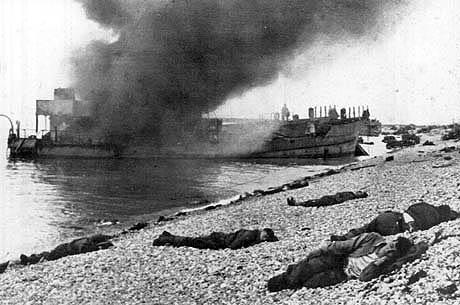
August 19, 1942.


The battle of Dieppe, which was against a German troup on the port, lasted nearly six hours. Of the 6000 men killed during this battle, mostly were Canadians. The battle of Dieppe was proven to be a failure from the begining. They had absolutely no chances of acheiving the plans they had made, and therefore this battle was simply a very large amount of unnecessary casualties. Thinking of the date, it 1942 they did not have the proper experience with battles such as this to calculate exactly how and when to do it. So this battle proved for one purpose, for gaining experience. Although in gaining this experience, the world has lost many men.


The short story "Stones" gives a very interesting point of view on this battle. The aftermath of one man, a father. David Max had experienced Dieppe as he had frozen in fear, resulting in the death of many of his men who may have survived. He took this experience as a very large sence of guilt for the rest of his life. He had taken it out of hiself, his wife, and his children. He became an alcoholic, bullied his children (as stated in the story forced his children to do things for him such as closing the blinds, and he had broken his youngest sons collar bone) and his wife, who he had tried to kill with a hammer.


This story fills you with a sence of grief and disgust, but also a feeling of remorse, for the family and him, and for what the war has caused them to go through.

Monday, October 3, 2011

Those Winter Sundays- Robert Hayden CM1120 #1

"Sundays too my father got up early
and put his clothes on in the blueblack cold,
then with cracked hands that ached
from labor in the weekday weather made
banked fires blaze. No one ever thanked him.

I'd wake and hear the cold spintering, breaking.
When the rooms were warm, he'd call,
and slowly I would rise and dress,
fearing the chronic angers of that house,

Speaking indifferently to him,
who had driven out the cold
and polished my good shoes as well.
What did I know, what did I know
of love's austere and lonely offices?"